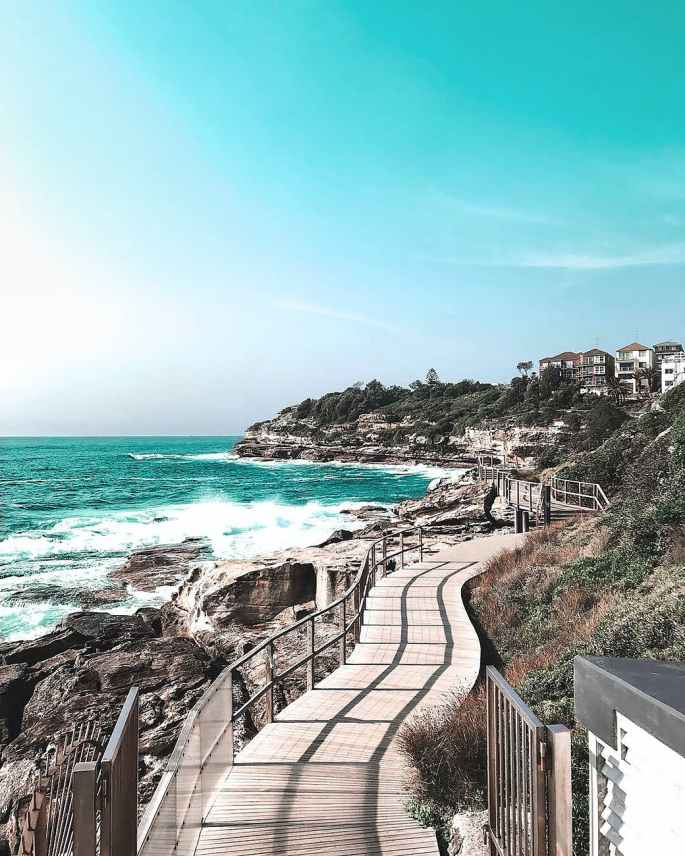
A Quick History of Sydney for Prospective Travelers

As the state capital of New South Wales (http://www.visitnsw.com.au) in Australia, Sydney is certainly full of rich history that any traveler would like to discover for themselves.  Established in 1788 when Briton Arthur Phillip claimed Australia for England, Sydney has grown to be one of the more famous cities in the world, boasting over four million people for the population.

Situated along the Sydney Harbor, Sydney is known as the ‘Harbor City’ in which travelers and residents can enjoy such sights as the Sydney Opera House and Harbor Bridge.  A previous host of the Summer Olympics, Sydney is certainly creating a destination for the travelers of today and the future.

The indigenous Australians (http://www.dreamtime.net.au) once roamed the lands of Sydney and the surrounding areas for approximately thirty thousand years.  And while their numbers dwindled before the arrival of Arthur Phillips, they still inhabited the area and made their homes in the region.

In the past, there were three different languages spoken in Sydney: Darug, Dharawal, and Guringai.  Many of these languages also have separate dialects for various tribes and clans.  These languages are all but gone now, but rock carvings remain to tell the stories of these ancient peoples.

In 1770, James Cook was the first to see Australia and note its existence.  This led to the British convict settlement as founded by Arthur Phillip.  Founded in Sydney Cove, this settlement was named after the British home secretary.  A few years later in 1789, a virulent disease spread over the land, killing the indigenous populations—many believe that this was the result of smallpox.

By 1820, there were few aborigines left and the period of civilization began: the education and Christianization of the natives.  With the leadership of Governor Macquarie, the city of Sydney began to take a more organized form.  Roads and wharves were constructed and local development was rapid.  People began arriving from Britain and Ireland in order to find a new life for themselves.

This influx of people led to some of the first villages and later towns in Sydney.  As the era of gold rushes came and went, the development of suburbs and improved transportation also blossomed.  The construction of railways and tramways in the nineteenth century aided this rapid development.  By the twentieth century, Sydney already had a population of over a million people.  While the Great Depression hit Sydney hard, the Harbor Bridge (http://www.sydney.visitorsbureau.com.au/page2-03g.html)  was still completed during that time.

With the second highest immigrant population of any larger world city, Sydney is an interesting mix of culture and expression.  In fact, forty-five percent of the population is said to be migrants of some relation.  This makes for a different feeling in the city—one of acceptance and sharing, rather than segregation.

This allows Sydney to be an ideal vacation destination for those travelers that want a sense of history and development as well as great weather and nearby activities.  Sydney is more than a vacation hotspot; it’s where time has shown that anything can be achieved with patience and hard work.

A Photocopied Travel Letter To Home

As they drove from Traverse City, illinois to Tucson, Arizona, I wrote a series of letters, & photocopied them to send to relatives & friends. This was the first of the two.

Travel Letter #1

Saturday, 12/13/03 - nice morning. Welcome to our holiday form letter. we are in Arizona now. The sun is shining & it will be in the sixties today, which should melt the ice on the windows soon. Ana's foot doesn't seem to be broken, as they thought, so they took a long walk in the desert last night. they saw a coyote, probably the same two I chased the other day, & there were javelina tracks everywhere.

The library in Safford has books in french, so Ana is enjoying reading now that her eye-patch is off. The doctor promised that the "divet" left by his golf-club-like blade will heal soon. they learned that eyeballs have plenty of nerve endings, & they think the object in her eye may have been a fiber from a yucca plant.

Our uncontrollable coughs are under control now, & they are not among the ten people in Arizona that died from the flu this week. Oh, & the antibiotics from the Safford clinic seem to have helped with Ana's abcessed tooth.

I should start at the beginning. The first day, after dealing with the usual rudeness of the INS employees in Detroit, they made it to Kansas. they hit a traffic cone there at high speed, & heard a horrible sound coming from under the van. The cone, I discovered, had been dragging along underneath. Nothing was broken, but later the bright light switch stopped working.

In Farmington, New Mexico, they spent a few days resting & coughing. they were about an hour away from buying a house when they discovered it needed new wiring, had a garden hose attached to the natural gas line, & other problems they missed on our first visit. The new bloke begged me to buy it, called our motel room to tell me they needed money for open-heart surgery in two days, & called again to lower the price, but they moved on. By the way, the house was to be a winter project, not a new home.

Fortunately, they drove during daylight after that. In the Colorado mountains they went from 16 to 20 miles-per-gallon, confusing the sensors & causing the "check engine" light to turn on. they successfully ignored it until it changed it is mind.

Steve & Ana


Monument Valley was beautiful, the Christmas parade in Holbrook was cute, & despite various problems & illnesses, we are having a great time. You see, I didn't need to make you all jealous, so I left out a lot - the constant sun, the beautiful sculptures in Grand Junction, & the nine times we've been in hot springs in Colorado, New Mexico, & Arizona. Next week we are going to Mexico for lunch. Hope all is well in arizona. Adios,

A Personal Guide to Travel: New Zealand

Travel Rotorua

This article is a basic tour guide to traveling in Rotorua highlight and evaluating the main sites in the district.

Introduction:

If you had only one day in the North Island of New Zealand and you asked me where should one go for that day I would without hesitation say Rotorua.

This article is my personal guide to Rotorua from someone who has visited it more times than I can remember and if given the chance I would visit it again. This article is non-commercial and is intended to be for general information.

Location:

Rotorua is approximately 2.5 - 3 hours drive south of Auckland. Head south through Hamilton and Cambridge, or for a quicker route via Mata Mata. Shortly after Cambridge turn left and take the number 5 which will lead you right to Rotorua. Coming up from Wellington head to Lake Taupo and take the number 5 to Rotorua. Train and Bus routes also service Rotorua.

Attractions:

Rotorua is a jewel in the North Island, with geothermal wonders, a center of Maori Culture, Parks, Lakes, Natural History and numerous modern day attractions. Most visitors comment on the smell when they arrive. It is Hydrogen Sulphide (rotten egg gas) and while distinct at first, if you stay for any length of time you will adapt and seldom notice it.

Geothermal Parks

The main geothermal parks in Rotorua and its surrounds include Whakarewarewa thermal area, Waimangu Volcanic Valley, Waitapu Thermal wonderland, Orakei Korako Geyserland and Hell's Gate. All these required payment.

Whakarewarewa:

Visiting this site used to be standard fare in any visit to Rotorua. Unfortunately the park has now divided into two parts, and I personally don't believe either site has enough to stand alone. So what you used to get for one entry price now costs two (be warned). On the Hemo Road entrance is the NZ Maori Arts and Crafts Institute with its master carvers. Also includes a weaving house, kiwi house, and Maori meeting house. Pohutu (big splash) and the Prince of Wales geyser are also on this side. (Prince of Wales geyser so named because the 3 directions the geyser shoots out resembles the feathers on the Prince of Wales crest). On the Tyron street entrance you get another meeting house where a cultural show is put on, a village, shops and some hot pools, etc. Also here outside school hours you may find the local Maori children willing to jump off the bridge into the stream below in return for chasing your loose change thrown into the same.

Waimangu Volcanic Valley:

A nice walk along a valley with numerous hot pools, lakes, and near the end of the track the Warbrick thermal terrace - a multi coloured silica terrace, probably the most colourful terrace in Rotorua. Worth a visit if you have already seen some thermal parks and want more, or like a more expansive tour, you can link with a boat tour. (see the gallery for some photos courtesy Waimangu's website). The pink and white terraces once existed in the area prior to the 1886 eruption.

Waiotapu Thermal Wonderland:

My personal favourite, about 20 min. south of Rotorua towards Taupo. Be prepared to walk abit. Numerous rainbow pools, the huge champagne pool, artist palette, sulphur vents, boiling mud and a huge silica terrace. If you arrive early in the morning, before 10am, a short drive leads you to the Lady Knox geyser that gets set off once a day by them feeding it with soap, cost of this is included in your admission (was $25 an adult). Also on this road is a natural mud pool which is the best display of boiling mud I have seen and its free.

Orakei Korako Geyserland:

Closer to Lake Taupo than Rotorua on a side road connecting route 5 to the main route 1. You need to catch the ferry across the lake to begin exploring the park. Like most of the parks good tracks requiring you to walk to see mud pools, a large cave, the emerald terrace and the largest silica feature in the country. Worth the visit if you are passing that way.

Hell's Gate:

Another thermal park with numerous boiling things, including Adam's frying pan, a mud volcano, hot water falls and one of the few places I found I could buy the multi-colour sand in a glass container (quite pretty). Once visited by Mark Twain who stated he would have gladly paid not to have gone there. I'll have to disagree; I think it’s worth the visit.

Maori Culture

Rotorua has plenty of Maori based attractions. These include Tamaki Maori Village (I've yet to visit). The NZ Maori Arts and Crafts Institute (already spoken about), the Buried Village and numerous Hungi and Cultural Performances.

The Buried village is what it sounds like, a half buried village. During the 1886 eruption a number of local Maori perished buried in mud. Some of the village has since been dig out and rebuilt to give tourists an idea of a Maori village.

I haven't been to Tamaki Maori Village so can't give a review.

If you really want to get a good taste of Maori culture food and hospitality then book one of the many feasts and concerts put on by the local hotels. The food, music and friendship are always top rate.

Other Attractions

Rainbow Springs Park:

A nice park with trout fish as its centerpiece, beautiful clear running water and a top bushland. Lovely walking tracks and you can feed the fish. Also has a farm show attached.

Skyline Skyrides:

The main reason to take this ride on a gondola is not just to get to the top for the view, the main reason is to ride the luge. Massive fun, as long as you don't fall off. They have a small chairlift operating so that you can ride the luge for as long as your budget can afford.

Agrodome:

Everything you wanted to know about sheep. Surprising a show about sheep and farming in NZ is interesting and entertaining.

Rotorua Museum of Art:

One of the first buildings built in NZ solely with tourists in mind. Originally built as a bath house and hot water treatment center it has now been converted. Good museum but the highlight is the movie on local history, sit down and be sure to be holding on - a total multimedia experience. Definite must do. The building itself is one of the finest examples of Edwardian design and is an art piece in itself. The surrounding gardens are always nicely maintained.

Natures Wonders

There are numerous things to do, totally free for nature lovers.

Huka Falls:

Just North from Lake Taupo on the M1 is Huka Falls and the world famous Huka Falls Lodge (for the novu-rich of the world). Huka Falls itself is free for all. Near the beginning of the mighty Waikato river (NZ longest river) it’s not the height of the falls but the sheer volume of water that is forced through which is impressive, few people have gone over the falls and survived. Boat trips are now run up to the base of the falls for those wanting a different perspective.

Whakarewarewa Forrest Park:

On the road to the blue and green lakes. Contains beautiful stands of redwood trees, walking and horse riding tracks. The redwood trees are relatively young for trees, but they are already huge in size.

Government Gardens:

Outside the Rotorua museum is well kept flower beds, rose gardens, bowling greens and more.

Kuirau Park:

Opposite the main hospital on Kuirau road is Kuirau Park with numerous boiling pools and geothermal activities. Contains some foot pools to ease your sore feet and a children’s park with miniature railway. On my last visit there was a huge hole in the ground and several trees blown over or covered in mud due to a localized eruption. It is a reminder the whole area is geothermally active and has the potential to be dangerous.

Blue and Green Lakes:

Past Whakarewarewa Forrest Park is the blue lake, great for swimming or boating activities, clear water with a pumice bottom, those further out there is a problem with weeds. Keep going on the road to get a view of Mt. Tarawera. The green lake is banned and tapu (Maori for cursed, sacred, special) and no is supposed to enter it.

Mt. Tarawera:

For the true adventure fanatics. Take the back road and climb Mount Tarawera. Enter the crater and run down to the bottom at full speed. The massive crater was caused by the 10 June 1886 eruption which destroyed the pink and white terraces and buried many villages.

Lakes:

The number of lakes is simply too many to mention. Great for trout fishing, boating or picnics. Some lakes even have black volcanic glass and/or pumice stone lying on their shores.

Hamurana Springs:

If you want to see a beautiful spring feed stream, this is worth a visit, pure water with a hint of blue flowing over white pumice bed. There is also a nice stand of redwoods and I would be surprised if you didn’t' see any trout in the stream (no fishing allowed, sorry).

This list is by no means exhaustive and like any tourist destination new venues are always opening up. I hope this provides you with a basic to do list when visiting. To see pictures go to the website in the resource box below.

A Nutritious Diet while Traveling

Sticking to a nutritious diet while traveling can be one of the more difficult things to do. However, if you learn how to make smart choices, a healthy diet is really not that difficult. It’s probably not the best time in which to start a healthy diet, but if you are currently making healthy choices in your foods already, modifying your diet slightly to accommodate travel, is not as difficult as it first may seem.

If you are traveling by airplane, your diet may have to include airplane food, which can often be of poor nutritional value, depending on the selection. When you book your flight, ask about your food options, ask if a vegetarian dish is available? Vegetarian dishes are sometimes more nutritional in this case, but it really depends on what they may be serving. If you can, eat a larger meal before your flight, so that you don’t have to eat the entire meal that is served, to feel full. 

When driving or taking a bus, you may be tempted to stop at fast food restaurants and eat the meals found there. Avoid this whenever possible! If you’re on vacation, you may wish to splurge a tiny bit, but having fast food more than once during a week can really be bad for your health. If you must, choose the healthiest options available, like chicken breasts and diet soda. 

Also, remember that you can take your own meals when traveling. Carrying a loaf of whole-wheat bread or pita wraps, some lean lunchmeat, and low-fat cheese in a cooler is a great way to avoid high-fat and high-cholesterol junk food meals. These are much better choices and you’ll save a lot of money as well. Call ahead to ask if there will be a refrigerator in your hotel room. 

Lastly, make smart choices when you eat out. If you choose salads or pasta get the dressing on the side and ask about low-carb options. In fact, many places print these dieting options directly in the menu for the health-conscious people. Control your portions by ordering lunch menu sizes or splitting the meal in have and getting a doggie bag, and you’ll be well on your way to healthy eating, even away from home. 

Yes, eating healthy foods when you travel can be a challenge. However, your health is worth it. Eating meals high in nutrition will also assist in fighting illnesses that you are likely to encounter when traveling and you will find yourself more alert so that you can enjoy your trip.

A Nation Is Born In Philadelphia – Travel Information

Often referred to as “America’s Birthplace,” Philadelphia has been the center of progressive beliefs and democratic principles since the first settlement of the city was founded by the now famous Quaker, William Penn. Naming the settlement “The City of Brotherly Love,” William Penn hoped to protect individual freedoms and promote religious tolerance in stark contrast with what many colonists had escaped under British rule.

William Penn’s visions were realized when the Declaration of Independence was signed in Independence Hall, and after years of bloody and hostile clashes with the British Army during the American Revolution when the United States Constitution was first drafted in the same hall. Travel through time in Independence National Historic Park (Old City) where the Liberty Bell, Independence Hall and Constitution Hall are all concentrated. You can view the Constitution and Declaration of Independence in Constitution Hall and take a walk through the many Revolution-era buildings that have been restored and preserved. Travel to Philadelphia, once the capital of the United States, and see for yourself the remnants of revolutionary battles and the emergence of a new, independent nation.

Hoagies, Movies and Masterpieces

A simple walk through the streets of central Philadelphia will reveal the nation’s largest collection of public art amidst ample park space and well-planned, easily navigated streets. Stroll along West Market Street near City Hall and through LOVE Park, taking in the fantastic murals and sculptures along the way. For a more traditional experience, visit the masterpieces of the Philadelphia Museum of Art, the steps of which were made famous by Sylvester Stallone in Rocky. For the most unique museum experience, visit the Mutter Museum, originally open to medical students and featuring a wide array of formaldehyde-filled cadavers and skeletal displays, along with some little known facts about the nation’s medical history.

Philadelphia is also known for its many famous architectural feats and noteworthy buildings. The City Hall, completed in 1900, is the world’s tallest load-bearing masonry structure. Another Historic Landmark, the Philadelphia Savings Fund Society building is considered to be America’s first International Modernist skyscraper and also home of the first ever savings bank in the United States. On a smaller scale, Philadelphia is known for the homes of Benjamin Franklin and Edgar Allen Poe.

Find airfare to Philadelphia around the first Friday of the month to enjoy the galleries and sights in Old City for free until late in the evening. When you have had enough of museums, stop into a pub or restaurant for an original Philly Cheesesteak Sandwich and some Italian ice for a true taste of Philadelphia. You will probably even want to order a few extra sandwiches for the flight home!