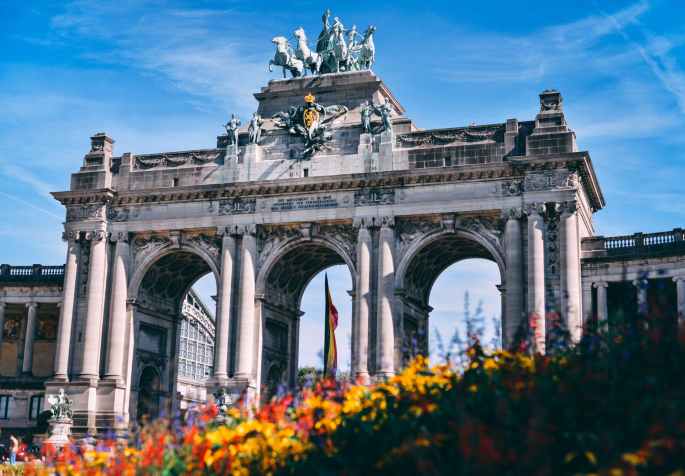
Located on the European mainland, Belgium often is short-shifted in discussions of Europe. Following is an overview of Belgium for travelers. An Overview of Belgium for Travelers Belgium is located on the coast of the North Sea between Holland, German and France. The name comes from the Belgae, a celtic tribe. Belgium’s geographic location places it at the crossroads of much of Europe, particular in relation to the United Kingdom and mainland Europe. As a result, the country has been heavily influenced by the powers that be in Europe during certain periods of times. You can find aspects of Romans, Celtics, Germanic, French and Spanish influences. Ruled by various European empires, the cities of Bruges, Brussels and Antwerp were major commercial trading posts. They also produced some of the more spectacular artists in Europe, including Eyck and Rubens. In modern times, the country is really three separate states with significant autonomy. The country is divided up into Flemish, Walloon and a smaller Germanic area. The Flemish are Dutch speaking while the Walloon are oriented to French. The divisions between these areas are significant and they have significant autonomy from the federal government. One might argue they are countries unto themselves. The official name of Belgium is the Kingdom of Belgium. The country is located in Western Europe and covers approximately 12,566 square miles. Brussels is the capital of the country and has a population of approximately 922,000 people. The second largest city is Antwerp with 452,000 residents. The people of Belgium are known as Belgians. Total population for the country is 10.4 million with a paltry annual growth rate of less than one half of one percent. The country is divided into three linguistic regions, Flanders, Wallonia and Brussels. French is the dominant language in Wallonia, Dutch in Flanders and German in the Brussels area. Most people of Belgium claim Roman Catholic as their faith, but Protestant, Jewish, Muslim and Anglican communities exist. The literacy rate is 95 percent. Belgium is an odd hodgepodge of influences. That being said, everyone seems to get along in these modern times and Brussels is a major financial center in the Europe.
Tag: travel
An Overview Of Austria For Travelers
Although Austria is rarely in the headlines these days, it was once part of a dominant European power. Following is an overview of this postcard country. An Overview of Austria for Travelers With its prime location in mainland Europe, Austria was a major player in economic, military and political terms when it was known as the Austro-Hungarian Empire. Alas, this role was significantly diminished after World War I when victorious allies divided the empire. A much smaller Austria came onto the scene and has developed into an ideal travel and relocation destination. Famous Austrians dot the historical record. Wolfgang Amadeus Mozart and Ludwig van Beethoven were mavericks in music. In psychology, a certain Sigmund Freud made just a slight impact. Currently, the Governator, Arnold Schwarzenegger, was born in Austria. The official name of the country is Republic of Austria. It covers a relatively small area of land, 32,000 square miles. The capital is beautiful Vienna, which has a population of just over 1.6 million people. Other cities of note include Salzburg and Innsbruck which has hosted a winter Olympics. The country is predominantly a mountainous one and has a climate categorized as continental with plenty of rain and snowfall. Summers in the mountains of Austria are simply dazzling. You can pull up pictures on the Internet or simply watch the movie, The Sound of Music. The people of Austria are known as “Austrians.” The total population for the country is just over 8 million people, and barely growing each year at a rate of .4 percent. The ethnicity of Austrians breaks down as 98 percent German with a mix of neighboring country natives mixed in. The dominant language is German. Roman Catholic is the faith of 73 percent of Austrians although 12 percent claim no religion at all. The literacy rate in this well-developed country is 98 percent. Life expectancy for women is 81.7 years while men average 75.9. As this overview of Austria demonstrates, the country has seen all sides of the power ledger. Regardless, Austria is a beautiful country with a rich cultural heritage and is definitely worth a visit.
An overview of Australia for travelers
Australia is a very diverse country geographically and a hot spot for tourism. If you are thinking about heading down under, here is some information on Australia. An Overview of Australia for Travelers Australia is its own continent, the only country in the world that can say as much. It covers roughly 3 million square miles and is about the size of the continental United States. The capital is Canberra, but Sydney is the biggest city with 4.2 million people. The climate of Australia is extremely dry inland with more temperate conditions along the coast. The population centers are primarily along the coast due to soaring temperatures inland. Australia was originally inhabited by Aboriginal tribes. In 1770, Captain Cook claimed the land for Great Britain. In 1788, the first colony was established in New South Wales. Most of the colonists were convicted criminals from Great Britain. Gold was discovered soon thereafter and Australia became a destination for immigrants seeking fortune and a new start in life. On the far northern coast, Australia is home to one of the amazing sites in the world. The great barrier reef is a water enthusiasts dream. With incredible plant life, the reef is world renowned as a diver’s paradise. A watchful eye is advised given the presence of the Great White Shark in the area. Australia is a Commonwealth. The federal powers are mapped somewhat after those in the United States, but no bill of rights exists. Unlike the U.S., the individual territories retain significant authority over their own affairs. People in Australia are called “Australians.” The country has a population of just over 20 million, and the population is growing at a rate of 1.1 percent a year. Australians ethnicity is 92 percent European, 6 percent Asian and 2 percent Aboriginal. No religion dominates, but 27 percent of Australians considered themselves Roman Catholics. Life expectancy for males is 78 years while females live to 83 on average. Literacy rates are a surprisingly low 85 percent. Australia was often considered the forgotten country. Long distance transportation changed that designation. Now it is one of the hottest tourist destinations year in and year out.
Amsterdam Cheap Travel Guide
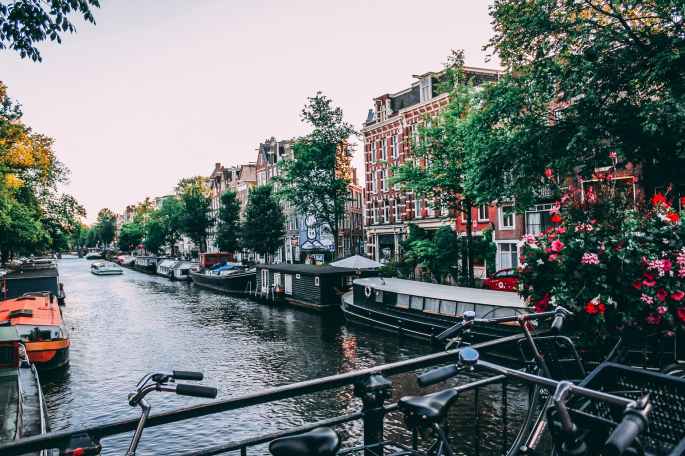
When you opt for a cheap travel to Europe, the city of Amsterdam should be your best choice. The city offers cheap relatively compared to most European cities but not sacrificing the quality of the trip. The city... Amsterdam is undoubtedly a beautiful city. No wander it is the fourth most visited cities in the region just after Paris, Rome, and London. Most of the population speaks either French or German or both. The people also can speak English and Dutch as well. The area is relatively flat. You cannot find slopes and hills unlike other European cities. If you want to roam Amsterdam by foot, it is very conducive for hiking. This would save you from the trouble of renting a car or hiring a taxicab to transport you within the city. And since Amsterdam has lots of sights to offer, hiking would be fill up the day while spending some time on different attractions the city has to offer. If you don't feel the idea of hiking, Amsterdam provides not only cheap but free transportation. White-bikes are located in abundance in the city. In fact there are over 700,000 bikes waiting for you. You can hop on one of these communal bikes at one place then drop it off on the other. They are stationed in different point of the city so you won't get a hard to locate one. Not into biking and hiking but still opting for cheap Amsterdam vacation? You can always ride any of the public transportation within the city. Amsterdam offers some of the best train, bus, and tram systems in Europe. They are cheap and the service is extremely good. The attraction... Amsterdam is lined with several museums and monuments often time just a shot away from one another. To be exact, Amsterdam has 42 museums and almost 7,000 monuments within its limits. And if you want to visit them without confusion, the city has prepared 7 waking routes, marked especially for you. You can see the works of Hals, Vermeer, Rembrandt, and several other world-renowned artists in Amsterdam's most famous museum- the Rijks museum. A Van Gogh admirer? Vincent Van Gogh has his own museum located near Rijks. For a more contemporary and modern pictures, paintings, and pottery, you can visit Stedelijk Museum of Modern Art. For a closer feel of Amsterdam during the 1600s, you can visit the Museum Willet-Holthuysen that is considered World Heritage Site by UNESCO. When you visit during summer (July-August), expect to see bed of Tulips along with other Holland's pride- narcissus, daffodils, and other flowers. Canal attraction is superb. During summer, you can tour the city by boat. The city's canal stretches up to 100KM giving you an alternative way to see the city. During winter, the same canal freezes and transforms into a sporting site where skating events take place. The rates... Amsterdam is not a typical European city where you have to spend so much to survive. It does not charge premium rates like any other European cities. You can stay at one of the hostels in Amsterdam under $70. Dining is also very affordable in the city. You can survive a decent meal for under $15. Transportation is also cheap. Tram pass could be purchase at around $5 for unlimited ride for the day. Picturesque view and rich culture and history give every reason to travel to Amsterdam. And with prices are relatively cheap, you surely would enjoy your stay at Amsterdam.
American Standards And European Culture: How to Avoid A Disappointing Vacation Experience While Traveling In Europe
Planning a vacation to Europe? No doubt you have certain expectations about your upcoming journey.
Perhaps you’re the kind of person who expects to spend your days admiring the amazing architecture and prowling world-famous museums for masterpieces. Or maybe you’re going to Europe to meet interesting people, relax on the beach until the sun goes down, and dance the night away in a local club. Regardless of your European vacation priorities, you certainly expect it to be wonderful!
But stop a moment. Have you thought about your cultural expectations?
Many European vacationers plan their activities and accommodations with the assumption that everything else will be “like America.” If so, think again! Just as Europe and the US are different in landscape, weather, and history, they are also very different culturally. Europeans and Americans have different ideas about manners, time, personal space, personal property maintenance, and language.
So for anyone planning a vacation to Europe, here are a few “cross cultural conflict” areas that Americans traveling in Europe often encounter. Making yourself aware of these differences can help you have a fun, enjoyable, and even educational European vacation that is free of cultural misunderstandings!
Personal Space
Take a glance at a map of the world. Which is smaller: the US or Europe? That’s right– Europe. But there are still a lot of people there, which means they’ve gotten used to smaller spaces!
American standards of living are very high. We’re used to king-size beds and bathrooms that can accommodate several people at a time.
But unless you’re staying in a massive French chateau or Italian villa, be prepared for spaces to be smaller than you’re used to. Bedrooms and bathrooms will be more compact, as will bed sizes. Single and double beds alike will be narrower. Kitchens won’t be able to accommodate your entire family!
So consider this an opportunity to get closer to your traveling companions. Think of sharing a bathroom in Italy as an exercise in cooperation. Get cozy with your spouse in that French double bed. Be willing to laugh as you adjust. Get creative and have fun!
Manners
A common misperception of Europeans is that they are “rude.” Of course, they think the same thing about us!
Remember when you’re traveling in Europe that rudeness is largely a cultural perception. Someone who seems blunt and nosey may be expressing friendship and concern for your well-being. A waiter who tells you what to order may be trying to help, since you are unfamiliar with the language. Differences in “personal space” mean that someone who cuts in front of you may not even understand that you were in line!
Also, subjects which are taboo in your community may be freely discussed elsewhere, and vice versa. In the US, we consider it incredibly rude to comment on a person’s weight. This isn’t true everywhere in the world!
So, when traveling in Europe, keep a firm grip on your temper. A good way to achieve this is to give everyone else the benefit of the doubt. Just make the choice not to get angry. If you can roll with the punches, you’ll enjoy your vacation more– and you’ll be a better traveling companion.
Time
I have to admit that I get impatient if I have to wait longer than fifteen minutes at a restaurant in the US. After the food comes, I can be out the door in half an hour!
In Italy, however, a dinner filled with conversation, laughter, and great food can last two hours! I smile when I hear other Americans asking why the food hasn’t arrived yet. Unbeknownst to them, the waiters are offering them the opportunity to savor the meal.
Likewise, shops and businesses in Spain close for an afternoon siesta. In the UK, the handyman may want to chat with you before repairing that pipe.
Most Europeans do not share the American compulsion to “save time” by doing everything quickly. So when you vacation in Europe, leave your watch behind. After all, this is a vacation!
Quality
I often hear complaints, especially from those who rent a villa or apartment, about the quality of the furnishings and amenities in Europe. I’d be a millionaire if I had a dime for every time I heard someone say “The furniture was old!” or “The bathroom pipes need to be replaced.”
In today’s society, we expect things to look like new, feel like new, and behave like new. If it doesn’t, we throw it away.
But think of anyone who grew up during the depression. My grandfather kept rows of old coffee cans filled with spare nails and bits of wire. He sat in the same chair every night until he died. Nothing was wasted, and nothing was thrown away if it could be fixed.
So if the furniture looks a little worn, or if the sink clogs, think before you complain. Is the quality due to neglect and disrepair, or is it the result of a careful, conscientious effort not to put anything to waste?
Treat this as an educational experience; you might even learn from a more conservative lifestyle.
Language
As an American, I am often jealous of Europeans who pick up languages like you’d pick up a bottle of milk at the store. For me, it’s an uphill battle all the way!
Since learning three or four languages is neither a cultural necessity nor a scholastic requirement in our country, many Americans feel like me. And yet some Americans still assume that everyone in Europe should speak English!
In the same way that you or I would resent a French tourist who expected everyone in the US to speak French, Europeans are often annoyed by Americans who have this mentality.
While you probably can’t learn a new language before your vacation, you can learn some helpful phrases. This is considered courteous and is guaranteed to get more friendly responses. When you try to use their language, Italians or French who might have feigned ignorance will usually help you with your pronunciation– and then converse with you in English!
The Right Attitude
Lastly, remember that the standards and the customs you find while traveling in Europe are not wrong. They’re just different. If you travel with the right attitude, you will have a richer, more authentic, and even eye-opening experience. Who knows? Your European vacation may change the way you see the world.


You must be logged in to post a comment.