China is often left out of discussions of early civilization which is a mistake since it was one of the first. If you are taking a trip to China, here is some background information your should know. An Overview of China for Travelers The official name of the country is the People's Republic of China. China covers a land mass of over 3.7 million square miles, making it a large country indeed. The capital is Beijing. Other major cities include Shanghai, Tianjin, Shenyang, Wuhan, Guangzhou, Chongqing, Harbin, and Chengdu. With such a massive land area, you can image that there is a wide variety of terrain in the country. Generally, one can find plains, deltas and hills in the east, while mountains, high plateaus and a vast desert exists in the west. The climate ranges from tropical in the far south to arctic cold in the far north on the border with Siberia, Russia. The people of China are known as Chinese. The most recent population study put the total number of Chinese at over 1.3 billion people, more than four times as many people as found in the United States. Population growth, however, has slowed to roughly half a percent annually. The reason for the slow down is very controversial. Concerned about economic strain caused by population growth, China has implemented a policy of allowing for only one child per family with some minor exceptions. Enforcement of this policy is supposedly done through fines, but forced abortions are known to occur despite government policy opposing them. The government hopes to stabilize the population at no more than 1.6 billion people through 2050. The current infant mortality rate is an astonishingly high 25.5 per 1,000 births. Ethnicity in China is a hodgepodge issue given its vast size and long history. Han Chinese is the dominant group, consisting of over 91 percent of the population. This is a very loose group, however, as evidenced by various dialects of language in the country. There are seven major Chinese dialects and literally hundreds of localized dialects. Mandarin is the dominant dialect, spoken by over 70 percent of the population in one form or another. That being said, only 60 percent of the Han Chinese can speak it with the remaining 40 percent speaking other dialects. In addition to Mandarin, languages spoken widely included Turkic, Korean, Uygur, Tibetan and Mongolian. It is often said that people in one part of China can’t communicate with people on the opposite side. From a religious perspective, China is officially atheist. That being said, it takes a lax view towards faiths that work with the government. Buddhism is the largest faith with over 100 million practitioners. Taoism is the second most popular. There is a smattering of Muslim and Christian believers, but nothing significant. As this overview demonstrates, China is huge and unique. This makes it a great travel destination.
Month: November 2021
An overview Of Canada
Home to hockey, Canada is a country of beautiful cities and wide open spaces. If you are considering taking a trip to the country, here is an overview of some things you might want to know. An Overview of Canada for Travelers The official name of the country is simply Canada. It covers an area of landmass over 3.8 million square miles in size and is the second largest country by square mileage in the world. The capital is Ottawa with a population of over 1.1 million people. Other major cities include Toronto with 4.8 million residents, Montreal with just fewer than 3.5 million people and the beautiful city of Vancouver with a population of roughly 2 million people. With its far northern location, Canada is a country with a cool climate. The farther north one goes, the colder it becomes until artic conditions apply. Citizens of Canada are known as Canadians. The most recent study put the total population at more than 32.4 million Canadians. Of this figure, ethnicity breaks down into a wide variety of groups with no group forming a majority. Specifically, Canadians are comprised of 28 percent British-Irish heritage, 23 percent French, 15 percent general European and a whopping 26 percent are classified as mixed. Following the transfer of Hong Kong from British rule to Chinese, many citizens of Hong Kong immigrated to Canada, particularly the Vancouver area. Religious preferences share the break down found in ethnicity. 44 percent of Canadians claim the Roman Catholic faith as their own, while 29 percent are Protestant. Other Christian and Muslim denominations are claimed by roughly 8 percent of the population. English and French are the languages spoken in Canada. Literacy rates are 99 percent. Average life expectancy for a Canadian man is 77 years while a Canadian woman will live to 82 years of age on average. Canada is a country with an odd segmentation. Whereas most countries tend to be divided towards eastern and western population centers, Canada can be said to be more of a north and south designation. Specifically, most of the population lives along the border with the United States and practically nobody lives in the far north given the cold. Canada tends to be overshadowed by its neighbor to the south. This is unfortunate as the country is beautiful, the people are friendly and life is lived at a comfortable pace.
An Overview of Belgium for travelers
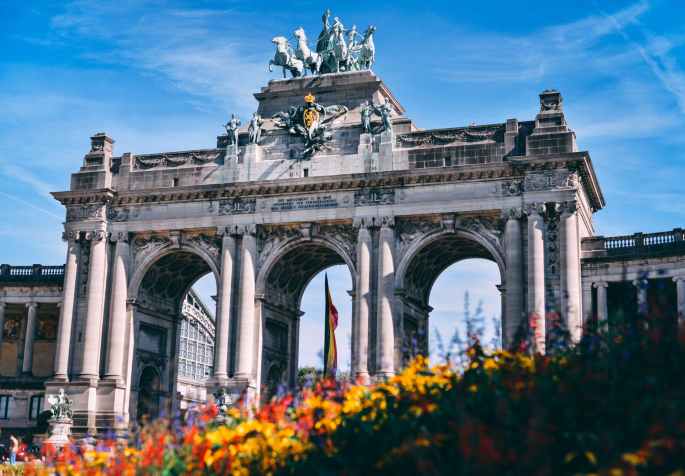
Located on the European mainland, Belgium often is short-shifted in discussions of Europe. Following is an overview of Belgium for travelers. An Overview of Belgium for Travelers Belgium is located on the coast of the North Sea between Holland, German and France. The name comes from the Belgae, a celtic tribe. Belgium’s geographic location places it at the crossroads of much of Europe, particular in relation to the United Kingdom and mainland Europe. As a result, the country has been heavily influenced by the powers that be in Europe during certain periods of times. You can find aspects of Romans, Celtics, Germanic, French and Spanish influences. Ruled by various European empires, the cities of Bruges, Brussels and Antwerp were major commercial trading posts. They also produced some of the more spectacular artists in Europe, including Eyck and Rubens. In modern times, the country is really three separate states with significant autonomy. The country is divided up into Flemish, Walloon and a smaller Germanic area. The Flemish are Dutch speaking while the Walloon are oriented to French. The divisions between these areas are significant and they have significant autonomy from the federal government. One might argue they are countries unto themselves. The official name of Belgium is the Kingdom of Belgium. The country is located in Western Europe and covers approximately 12,566 square miles. Brussels is the capital of the country and has a population of approximately 922,000 people. The second largest city is Antwerp with 452,000 residents. The people of Belgium are known as Belgians. Total population for the country is 10.4 million with a paltry annual growth rate of less than one half of one percent. The country is divided into three linguistic regions, Flanders, Wallonia and Brussels. French is the dominant language in Wallonia, Dutch in Flanders and German in the Brussels area. Most people of Belgium claim Roman Catholic as their faith, but Protestant, Jewish, Muslim and Anglican communities exist. The literacy rate is 95 percent. Belgium is an odd hodgepodge of influences. That being said, everyone seems to get along in these modern times and Brussels is a major financial center in the Europe.
An Overview Of Austria For Travelers
Although Austria is rarely in the headlines these days, it was once part of a dominant European power. Following is an overview of this postcard country. An Overview of Austria for Travelers With its prime location in mainland Europe, Austria was a major player in economic, military and political terms when it was known as the Austro-Hungarian Empire. Alas, this role was significantly diminished after World War I when victorious allies divided the empire. A much smaller Austria came onto the scene and has developed into an ideal travel and relocation destination. Famous Austrians dot the historical record. Wolfgang Amadeus Mozart and Ludwig van Beethoven were mavericks in music. In psychology, a certain Sigmund Freud made just a slight impact. Currently, the Governator, Arnold Schwarzenegger, was born in Austria. The official name of the country is Republic of Austria. It covers a relatively small area of land, 32,000 square miles. The capital is beautiful Vienna, which has a population of just over 1.6 million people. Other cities of note include Salzburg and Innsbruck which has hosted a winter Olympics. The country is predominantly a mountainous one and has a climate categorized as continental with plenty of rain and snowfall. Summers in the mountains of Austria are simply dazzling. You can pull up pictures on the Internet or simply watch the movie, The Sound of Music. The people of Austria are known as “Austrians.” The total population for the country is just over 8 million people, and barely growing each year at a rate of .4 percent. The ethnicity of Austrians breaks down as 98 percent German with a mix of neighboring country natives mixed in. The dominant language is German. Roman Catholic is the faith of 73 percent of Austrians although 12 percent claim no religion at all. The literacy rate in this well-developed country is 98 percent. Life expectancy for women is 81.7 years while men average 75.9. As this overview of Austria demonstrates, the country has seen all sides of the power ledger. Regardless, Austria is a beautiful country with a rich cultural heritage and is definitely worth a visit.
An overview of Australia for travelers
Australia is a very diverse country geographically and a hot spot for tourism. If you are thinking about heading down under, here is some information on Australia. An Overview of Australia for Travelers Australia is its own continent, the only country in the world that can say as much. It covers roughly 3 million square miles and is about the size of the continental United States. The capital is Canberra, but Sydney is the biggest city with 4.2 million people. The climate of Australia is extremely dry inland with more temperate conditions along the coast. The population centers are primarily along the coast due to soaring temperatures inland. Australia was originally inhabited by Aboriginal tribes. In 1770, Captain Cook claimed the land for Great Britain. In 1788, the first colony was established in New South Wales. Most of the colonists were convicted criminals from Great Britain. Gold was discovered soon thereafter and Australia became a destination for immigrants seeking fortune and a new start in life. On the far northern coast, Australia is home to one of the amazing sites in the world. The great barrier reef is a water enthusiasts dream. With incredible plant life, the reef is world renowned as a diver’s paradise. A watchful eye is advised given the presence of the Great White Shark in the area. Australia is a Commonwealth. The federal powers are mapped somewhat after those in the United States, but no bill of rights exists. Unlike the U.S., the individual territories retain significant authority over their own affairs. People in Australia are called “Australians.” The country has a population of just over 20 million, and the population is growing at a rate of 1.1 percent a year. Australians ethnicity is 92 percent European, 6 percent Asian and 2 percent Aboriginal. No religion dominates, but 27 percent of Australians considered themselves Roman Catholics. Life expectancy for males is 78 years while females live to 83 on average. Literacy rates are a surprisingly low 85 percent. Australia was often considered the forgotten country. Long distance transportation changed that designation. Now it is one of the hottest tourist destinations year in and year out.


You must be logged in to post a comment.